
Homomorphic Encryption Achieves CIFAR-10 Inference in 200ms
A meaningful speed breakthrough for privacy-preserving machine learning, making encrypted computation practical for real-world applications.
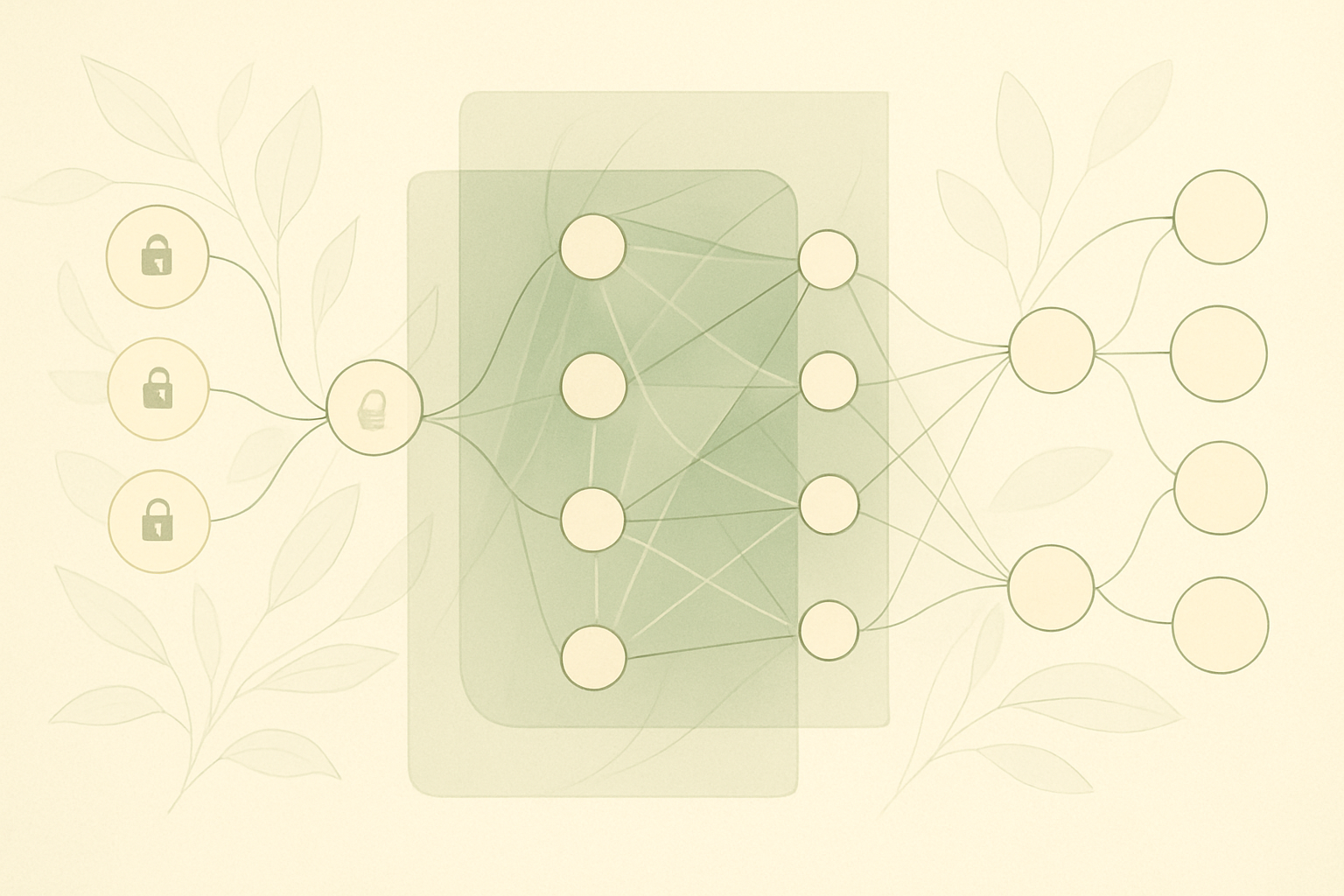
Encrypted Inference Without Decryption
Researchers at Belfort Labs demonstrated homomorphic encryption performing image classification on the CIFAR-10 dataset in just 200 milliseconds. Homomorphic encryption allows computation on encrypted data without ever decrypting it—a technique that has historically been too slow for practical use.
The CIFAR-10 benchmark involves classifying small color images into ten categories. Running this task on encrypted data in under a quarter second represents a substantial improvement over previous implementations, which typically required seconds or minutes.
Privacy-Preserving Machine Learning
The development addresses a central challenge in deploying AI on sensitive data: how to run models on private information without exposing that information to the computing infrastructure. Healthcare, finance, and government applications could benefit from inference that never reveals plaintext data.
Previous homomorphic encryption schemes faced computational overhead that made them impractical outside research settings. This performance milestone suggests the gap between encrypted and plaintext inference is narrowing.
What Remains
While 200ms inference represents progress, real-world deployment will require further optimization and testing across different model architectures. The CIFAR-10 dataset uses relatively small images and simple classification tasks compared to production machine learning workloads.
The research does not yet indicate whether the approach scales to larger models or more complex tasks without proportional performance degradation.